THE QUESTION
Ask, don't trail off
Write a clear, complete question rather than half a sentence, and cut anything the answer does not need.
Four habits doodlequiz
HOW TO WRITE A GOOD QUIZ
A good quiz question has one right answer and wrong answers worth arguing about.
How many options?
ONE ANSWERno tricks
Whether it is a pub quiz, a club night or a classroom check, the same rules apply. Testing researchers have spent decades on what makes a question fair. Here is what they found, in plain English.
Plain English, with the sources linked.
At a glance
46 studies
Studies pooled in one review
A 2025 network meta-analysis covered 33,437 students and 7,535 questions. Compared with five options, three-option questions were quicker to answer and less likely to contain options nobody picked, with no significant difference in reliability.
HOW MANY OPTIONS · 2025
31 rules
Item-writing guidelines, checked
Haladyna, Downing and Rodriguez tested a list of 31 guidelines against 27 testing textbooks and 27 research studies and reviews. Clear stems, plausible distractors and avoiding giveaways run through them.
WHAT THE GUIDES AGREE ON · 2002
TWO FINDINGS WORTH KNOWING
More choices look harder on paper.
In practice, weak ones mostly waste time.
The 2025 authors rated the certainty of their evidence as very low and advised checking results locally. For a quiz night, the practical point stands: three good options beat four with a filler.
A QUICK OPTIONS CHECK
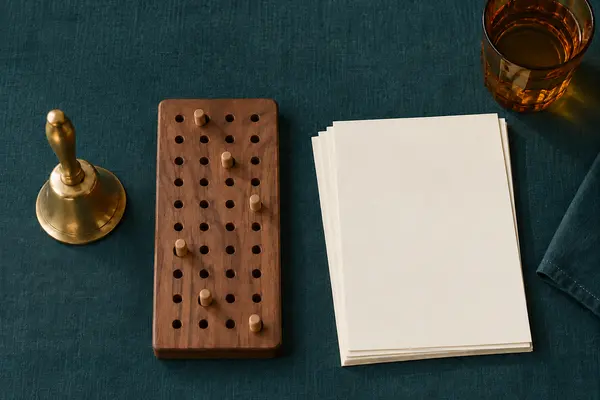
Pick how many answers you plan to offer per question. The meter shows the chance that a team guessing completely blind gets it right.
Blind guessing is only part of the story: a weak option that nobody believes does not make a question harder, it just takes longer to read.
THE SHORT ANSWER
A 2002 review boiled decades of advice
down to 31 item-writing guidelines.
THE QUESTION
Write a clear, complete question rather than half a sentence, and cut anything the answer does not need.
Four habitsTHE OPTIONS
Wrong answers should be believable, a similar length and in the same form as the right one.
How many options?THE SHORTCUTS
It and "none of the above" let partial knowledge pick the right answer. Testing guides advise against both.
See the evidence
WRITE ONE TONIGHT
Write it so someone could answer before seeing any options. If they cannot, the question is not finished.
Look for a second answer a clever team could defend. If you find one, tighten the wording before the night, not during it.
Use mistakes people really make, keep every option a similar length, and drop any that nobody would choose.
List numbers and dates from low to high, or names alphabetically, so the position of the right answer gives nothing away.
QUIZ FACTS
The Oxford English Dictionary records "quiz" from 1782, first meaning an odd or eccentric person. The tale of a Dublin bet in 1791 appears in only one record, from 1836.
University Challenge was first broadcast on ITV in 1962, made by Granada and based on the American show College Bowl. Bamber Gascoigne hosted it until 1987.
A 2002 review checked 31 item-writing guidelines against 27 testing textbooks and 27 studies and reviews, to see which advice held up.
A 2025 review of 46 studies found no significant difference in reliability or discrimination between three-option and five-option questions.
Guidance from Vanderbilt University notes that people often struggle with negatively worded questions, so use "not" only when you must, and make it obvious.
QUICK QUESTIONS
Short answers to the questions quiz writers ask most.
Three is often enough. A 2025 review of 46 studies with over 33,000 students found three-option questions took less time to answer and had fewer options nobody chose, with no significant loss in how well they separated stronger from weaker candidates.
Testing guides advise against both. With "all of the above", spotting two right answers is enough to pick it; with "none of the above", ruling out one option rules out another, so partial knowledge earns full marks.
Guidance from Johns Hopkins University recommends a clearly written question where possible, rather than an incomplete statement for the answers to finish. Questions are easier to read aloud, too.
It has to be believable. Vanderbilt University guidance notes that implausible alternatives do not work as distractors, so a joke option mostly gives the answer away. Keep the options a similar length and in the same grammatical form.
Nobody is sure. The Oxford English Dictionary records it from 1782, first meaning an odd or eccentric person. The story that a Dublin theatre owner invented it for a bet in 1791 appears in only one record, from 1836.
Sources
A NAME WORTH ASKING ABOUT
doodlequiz.com is part of the DoodleSale portfolio. It isn't in an auction right now, but you can ask about leasing it.